

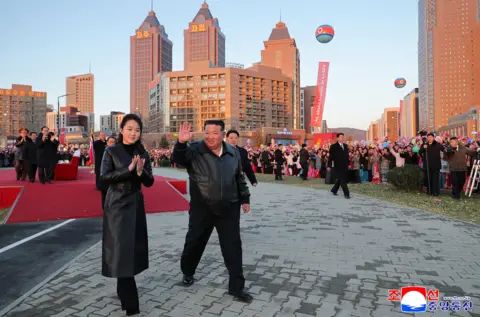
While pledges directed at Seoul and vows to develop the atomic arms programme, a major query persisted at the latest political assembly: would the leader's 13-year-old daughter be named as the next in line?
While definitive announcement did not materialise at the event, it has sparked a widespread debate about the young girl's potential as the future ruler of the 25m-strong nation, a dictatorship exclusively governed by the Kim clan.
Increased Public Profile and Speculation
The girl has become more visible in regime propaganda with her leader. Nonetheless, much about her remains unknown. Pyongyang has never publicly published her name or stated her date of birth.
She was originally made known internationally in 2013. Over the years, she is commonly thought to be a teenager, based on intelligence estimates.
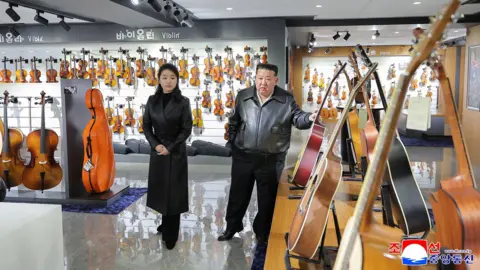
Evidence of Succession
Observers point to several notable signs. Her prominent public sightings—often centered in the camera view—and the use of respected titles usually reserved for the leader are seen as strong evidence.
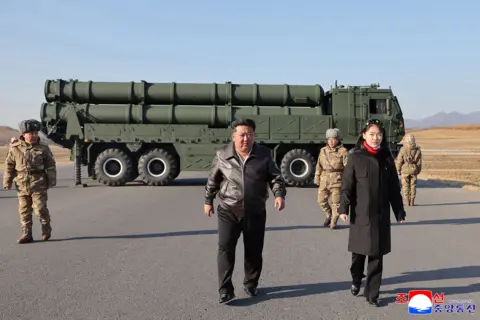
Furthermore, her close association with the military is deemed a further critical piece. She has inspected forces and weapons together with her father. Multiple times, senior commanders have been photographed stopping beside her to confer at military events.
"Regime propaganda is employing terminology reserved for the leader. It highlights her own iconic image," notes one leading expert.
This martial exposure is deemed crucial, as supreme control in North Korea rests with control over the military. To be a legitimate heir, she must be seen as a competent figurehead.
Controversy Over Sex and Custom
Yet, a significant opposing view is raised. Some experts believe that North Korea's deeply male-dominated system presents an insurmountable obstacle for a woman supreme leader.
Observers highlight that women at all level find it hard for fair recognition. Female commanders in high roles are very rare. Common practices also highlight these attitudes.
"If they do, they finish the journey then go to the rear of their car and spit thrice to ward off the misfortune," explains a former North Korean official.
Changing Social Realities
Conversely, other analysts argue that the status of females in North Korea has evolved significantly since the economic collapse.
Amid that period, as the official economy collapsed, women often became the main entrepreneurs, pursuing informal trade. This has allegedly led to a slow transformation in gender dynamics.
One scholar who has studied many escapees argues that it is currently less unusual to see women in leadership positions within the country.

"We must not analyze North Korea with outside framework. We must consider them as the ancient kingdom," comments the researcher. "Who would presume oppose someone of Paektu lineage who is taking the throne?"
Succession Moves
Latest political moves are also being scrutinized. The promotion of Kim Yo Jong, the leader's powerful sibling, to a key ideological position is seen by some as a step to establish a guardian for the possible heir.
Finally, observers are split. Some view the attention on Ju Ae as a calculated tactic to soften the leader's public persona and prepare the ground for another dynastic succession. Others insist the indicators of her preparation are too substantial to ignore.
Irrespective, the debate itself may serve a function for the leadership, maintaining international eyes firmly trained on the enigmatic Kim family rule.


